Learn · The 4Cs
Four grades. Only one of them you can see from across a room.
Cut, color, clarity and carat weight describe every diamond, laboratory-grown or mined. They are useful, but they are not equally useful. Cut governs how the stone behaves in light; the other three mostly govern what you pay. Here is how we weight them when we buy stones for our own customers.
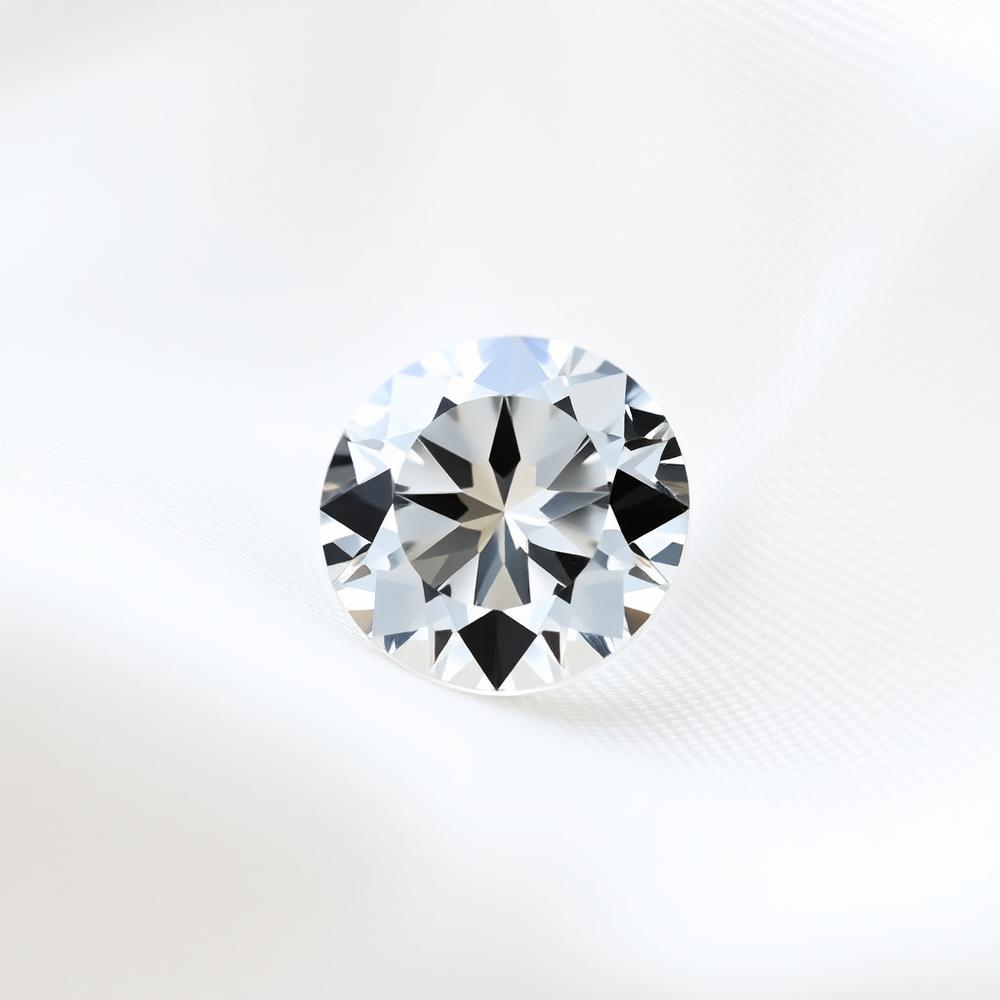
First priority
Cut — the only C that creates light
- Excellent / Ideal
- Light entering the crown returns through the table. This is where brilliance comes from. Worth paying for.
- Very Good
- Visually close to excellent in most mountings; a reasonable saving on larger stones.
- Good
- Noticeably less lively face-up, especially under soft indoor light.
- Fair / Poor
- Light leaks through the pavilion. We don't stock these at any price.
Cut grade summarises proportion, symmetry and polish: how the facets are angled and how precisely they meet. A shallow stone leaks light through the bottom and looks glassy; a deep one looks small for its weight and goes dark in the centre. Note that only round brilliants receive an overall cut grade from GIA — for ovals, emeralds and other fancy shapes you have to read the proportions, symmetry and polish lines instead, which is part of what we do before a stone is listed here.
Second priority
Color — judged against the metal it sits in
- D–F (Colorless)
- No tint face-up in any metal. The safe choice for white gold.
- G–H (Near colorless)
- Effectively white face-up once set; the best value band for most buyers.
- I–J
- Slight warmth that yellow and rose gold absorb attractively; visible against white gold in larger sizes.
- K and below
- Warm enough to read as champagne in stones above roughly 1.50 ct.
Color is graded face-down against masterstones, which is not how anyone wears a ring. Face-up in a setting, the practical question is whether the stone reads white next to your metal. In yellow or rose gold, a G or H is indistinguishable from a D to almost every eye, and the saving is real. Step cuts such as emerald and Asscher show body color more readily than brilliant cuts, so we tend to buy those a grade higher.
Third priority
Clarity — aim for eye-clean, not flawless
- FL / IF
- No inclusions at 10x. A price premium you rarely see face-up.
- VVS1 / VVS2
- Inclusions very difficult to find at 10x. Beautiful, and expensive relative to VS.
- VS1 / VS2
- Eye-clean in almost every case. This is where we buy most of our center stones.
- SI1 / SI2
- Can be eye-clean, particularly in brilliant cuts — but must be checked stone by stone.
- I1–I3
- Inclusions visible without magnification and sometimes affecting durability. We don't sell them.
The inclusion plot on the report shows position as well as type. An inclusion under the table in the centre of the stone matters far more than the same inclusion tucked near the girdle where a prong will cover it. Ask what the inclusion actually is and where it sits — that question is worth more than two clarity grades.
Fourth priority
Carat weight — buy the look, not the number
- Carat is weight, not size
- One carat equals 0.20 grams. Two one-carat stones can differ visibly in diameter depending on how the cutter distributed the weight.
- Look at the millimeter spread
- A well-cut 1.00 ct round measures around 6.4–6.5 mm across. A deep stone hides weight in the pavilion where you can't see it.
- Magic numbers cost money
- Prices step up at 0.50, 1.00, 1.50 and 2.00 ct. A 1.90 ct stone often looks identical to a 2.00 ct and prices meaningfully lower.
- Match the hand
- On a size 4 finger a 1.50 ct reads large; on a size 8 it reads modest. Ask us for a millimeter comparison before you commit.
How we'd spend a fixed budget
If you handed us a number and asked for the best-looking ring we could build with it, we would buy an excellent or ideal cut first, drop color to G or H, take a VS2 that we have confirmed is eye-clean, and then put whatever remains into carat weight — stopping just under the next magic number. That order produces a livelier stone than paying for a D/VVS1 and settling for a smaller, less precisely cut one.
Learn hub
Continue learning
- Lab-Grown Diamonds 101What a laboratory-grown diamond is, how it's made and how it's verified.
- Lab vs. MinedWhere the two are identical, where they differ, and how the economics work.
- CVD vs. HPHTThe two growth methods explained without the chemistry lecture.
- Diamond ShapesHow each shape behaves in light, and which ratios to look for.
- Diamond Buying GuideA step-by-step order of decisions for buying remotely with confidence.
- IGI Grading ReportsRead your report line by line and verify it at the laboratory.
- FAQsStraight answers on grading, sizing, shipping, warranty and care.