Lab-Grown Diamonds 101
Here's exactly what you're buying.
A laboratory-grown diamond is a diamond produced in a controlled environment rather than extracted from the earth. Same carbon lattice, same hardness, same way of handling light. What follows is the honest version: how the stones are made, how they're graded, and where the price difference actually comes from.
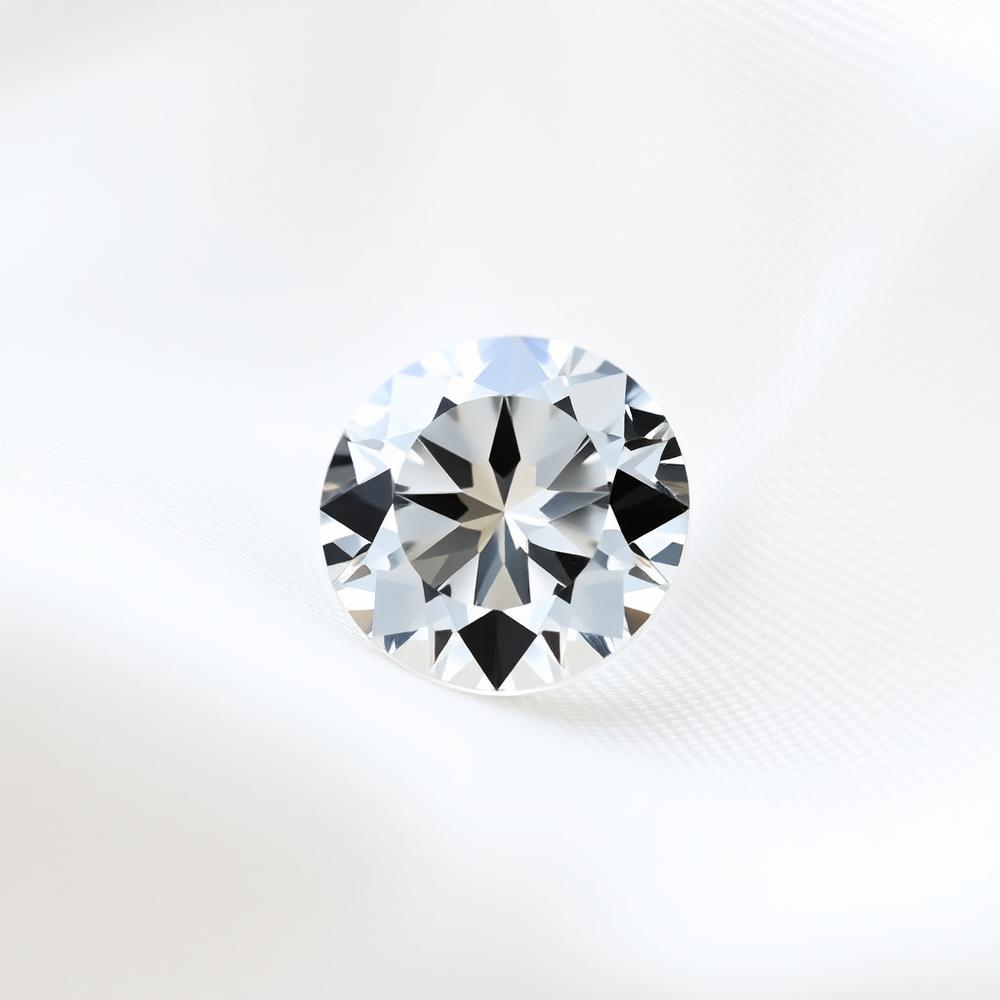
How carbon becomes a diamond
Two ways a diamond is grown
Both methods start from a real diamond seed and end with a rough crystal that is cut and polished exactly like any other rough diamond. You don't need the chemistry — the short version is that carbon is given the conditions it needs to keep building the same crystal.
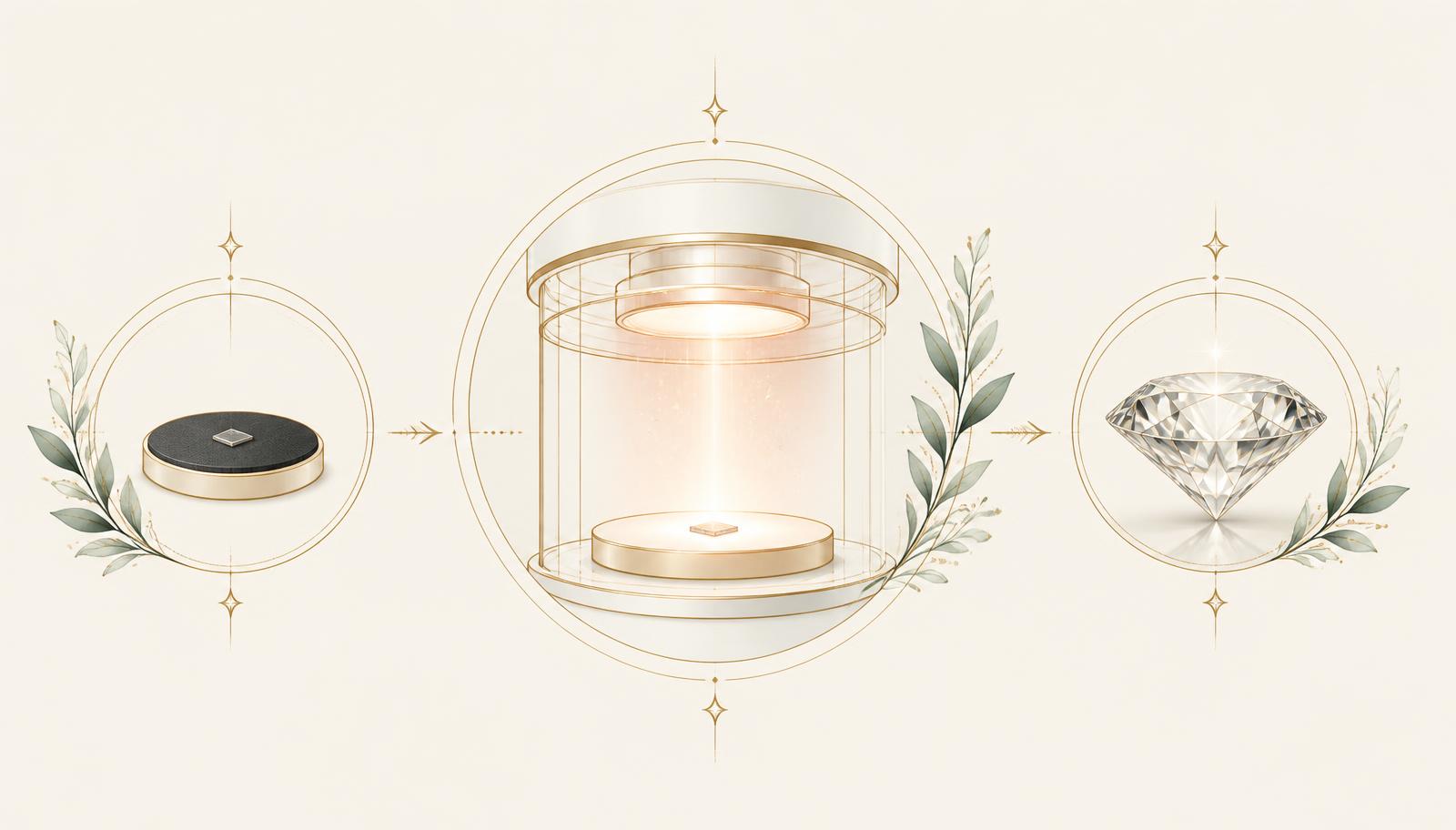
CVD — Chemical Vapor Deposition
A thin diamond seed sits in a sealed chamber filled with carbon-rich gas. Energy breaks the gas apart, and carbon atoms settle onto the seed layer by layer, extending the same crystal structure upward over several weeks.
HPHT — High Pressure / High Temperature
A seed is surrounded by pure carbon and placed under pressure and heat similar to the conditions deep in the earth. The carbon dissolves and recrystallizes onto the seed as a single diamond crystal.
Verification
Independently graded, and checkable
We don't grade our own diamonds. Each center stone is sent to an independent laboratory, IGI, which measures the 4Cs, confirms the stone is laboratory-grown, and issues a numbered report.
- IGI report included. Your report details arrive within 1–2 business days of your order, and the report ships with your piece.
- Inspected in Tampa. We check every finished piece against its IGI report and your order before it ships.
- Verify it yourself. Look the number up on IGI's own report-check page before or after you buy.
- Untreated. Our stones are sold as grown and cut, with no clarity or color treatments unless a listing says otherwise.
Straight answers
Common questions
- Are laboratory-grown diamonds real diamonds?
- Yes. A laboratory-grown diamond is crystallized carbon with the same chemical composition, crystal structure and optical properties as a mined diamond. It is not cubic zirconia and not moissanite, which are different materials entirely. The meaningful distinction is origin: one formed in a controlled environment, the other was extracted from the earth.
- Can you tell the difference by looking at them?
- Generally not by ordinary visual inspection, even by a jeweler with a loupe. Laboratory-grown diamonds are identified with specialized instruments that read growth characteristics and trace elements, which is exactly what an independent grading laboratory does before issuing a report.
- Do laboratory-grown diamonds have the 4Cs?
- Yes. Cut, color, clarity and carat weight describe any diamond, regardless of origin, and they still drive how a stone looks and what it costs. Cut quality has the largest effect on brilliance, so we weight it heavily when we select stones.
- Are your diamonds certified?
- Every center stone we sell is independently graded by IGI, and the IGI report is included with your piece, so you can look the report up directly on IGI's own verification page.
- Why do laboratory-grown diamonds cost less?
- The economics of production and supply differ from mined diamonds: growth is repeatable, lead times are measured in weeks, and the supply chain between the grower and you is far shorter. Every piece is also made to order and we keep no showroom, so you are not paying for inventory that sits in a case. Diamonds of any origin are jewelry, not an investment — we don't present them as one.
- How should I compare two stones?
- Compare like for like: same shape, same carat weight, same color and clarity grades, and the same grading laboratory. A report from a different lab can grade a stone differently, which is the most common reason two listings that look identical are priced apart.
Still deciding? Talk it through.
Thirty free minutes on video with someone who sets these stones for a living. We'll walk through reports, cut quality and what actually changes the look of a diamond.
Schedule a video consultLearn hub
Continue learning
- Lab vs. MinedWhere the two are identical, where they differ, and how the economics work.
- The 4CsCut, color, clarity and carat — and where to spend and save.
- CVD vs. HPHTThe two growth methods explained without the chemistry lecture.
- Diamond ShapesHow each shape behaves in light, and which ratios to look for.
- Diamond Buying GuideA step-by-step order of decisions for buying remotely with confidence.
- IGI Grading ReportsRead your report line by line and verify it at the laboratory.
- FAQsStraight answers on grading, sizing, shipping, warranty and care.